
Best Payment Processors for High-Ticket Invoices and Low Chargebacks

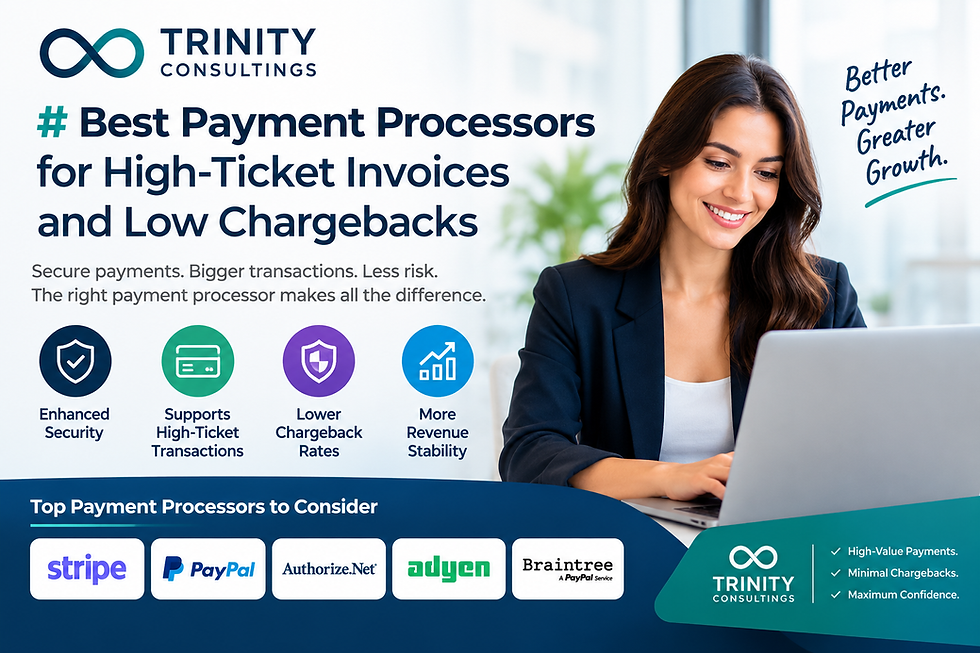
Choosing the Best Payment Processors can be challenging for marketing companies that handle high-ticket invoices, recurring retainers, and large client payments. A payment processor suitable for small transactions may not provide the reliability, risk controls, or account flexibility needed for larger invoices.
For marketing agencies, the right payment setup should support secure transactions while helping reduce payment disputes, fraud, and unexpected funding interruptions.
What Should Marketing Companies Look for in a Best Payment Processor?
Marketing companies often provide services such as SEO, advertising management, consulting, web development, branding, and lead generation. Because these services are usually delivered over time, payment processing can involve recurring billing and larger transaction amounts.
A suitable processor should ideally support:
High-value card transactions
Online and card-not-present payments
Recurring client payments
Digital invoices and payment links
Fraud prevention tools
Chargeback and dispute management
Reliable settlement schedules
Clear processing fees
Appropriate transaction limits
It is also important to understand how the processor evaluates your business. High-ticket transactions may receive additional scrutiny because a single disputed payment can represent a significant financial loss.
Why High-Ticket Marketing Payments Need Extra Attention
A $10,000 marketing invoice presents different risks from a $100 purchase. If the client disputes the transaction, the potential financial impact is much greater.
Marketing services can also create disputes because they are intangible. Clients may misunderstand deliverables, disagree about campaign performance, forget recurring billing terms, or claim that services were not provided as expected.
A strong payment process should therefore work alongside your client agreements.
Before collecting a large payment, clearly document:
Services included in the agreement
Project timelines and milestones
Invoice amounts and payment dates
Recurring billing arrangements
Cancellation requirements
Refund policies
Client approvals
Additional service charges
Clear documentation can provide useful evidence if a payment dispute occurs.
When Do You Need a High Risk Merchant Account?
Not every marketing company needs a high risk merchant account. However, one may become relevant when a business processes unusually large transactions, operates with higher chargeback exposure, has substantial recurring billing, or has difficulty obtaining conventional merchant processing.
High-risk underwriting may involve additional review of your business model, transaction history, expected processing volume, and financial risk. Depending on the provider, an account may also involve reserves or additional requirements.
Before accepting an offer, examine the complete terms rather than focusing only on whether the account is approved. Pay attention to processing rates, reserves, settlement schedules, chargeback fees, termination clauses, and funding conditions.
Choosing a High Risk Payment Gateway
A high risk payment gateway can connect your website, invoicing system, or payment page with the payment processor. For marketing companies, gateway functionality can be particularly important when handling remote or recurring payments.
Useful features may include:
Address verification
Card security checks
Fraud screening
Transaction monitoring
Recurring billing support
Payment records and reporting
Dispute notifications
Integration with invoicing systems
For high-value transactions, additional authentication and fraud controls can help reduce the likelihood of unauthorized payments.
Don't Focus Only on Processing Rates
A processor with a low advertised rate may not necessarily have the lowest overall cost.
Additional expenses can include monthly account fees, gateway charges, chargeback fees, reserves, minimums, and other contractual costs. Some businesses may also experience funding delays or additional requirements based on their risk profile.
When comparing processors, calculate the total cost of accepting payments rather than comparing transaction rates alone.
Practical Ways to Reduce Chargebacks
Payment processing cannot eliminate every dispute. Your own billing practices can make a significant difference.
Use a recognizable billing descriptor so clients can identify charges on their statements. Make invoices specific instead of listing a generic service name. Keep signed agreements, payment confirmations, project approvals, and records of important client communications.
For recurring marketing services, clearly explain when payments occur and how clients can cancel according to the agreement.
For larger invoices, make sure the client understands exactly what they are paying for before the transaction is processed. Clear expectations can prevent many misunderstandings that eventually become payment disputes.
Questions to Ask Before Choosing a Processor
Before opening a payment processing account, ask:
Can the processor support my average invoice amount?
Are recurring marketing payments permitted?
What transaction and monthly volume limits apply?
Is a reserve required?
How are chargebacks handled?
What fraud-prevention tools are available?
How quickly are funds settled?
What fees apply beyond the standard processing rate?
Can the processor integrate with my current billing system?
Under what circumstances could payments be delayed or an account restricted?
The answers can help you determine whether the processor fits your company's actual payment profile.
Final Takeaway
The Best Payment Processors for marketing companies are not necessarily those with the lowest advertised rates. For high-ticket invoices, reliability depends on suitable underwriting, transparent pricing, fraud controls, dependable settlements, and effective chargeback management.
Marketing companies should evaluate their average transaction size, recurring billing model, chargeback exposure, and monthly processing volume before choosing a payment solution. Taking these factors into account can help create a payment process that is more predictable for both the business and its clients.
If you need to evaluate payment-processing requirements for your marketing business, Trinity Consultings can be included as a resource when exploring suitable payment-processing options.



Comments