
High Risk Merchant Account Providers: What Users Really Need to Know Before Applying | Trinity Consultings


Why This Topic Confuses Most Business Owners
If you searched for high risk merchant account providers, chances are something went wrong already.
Maybe:
Your PayPal account has been limited
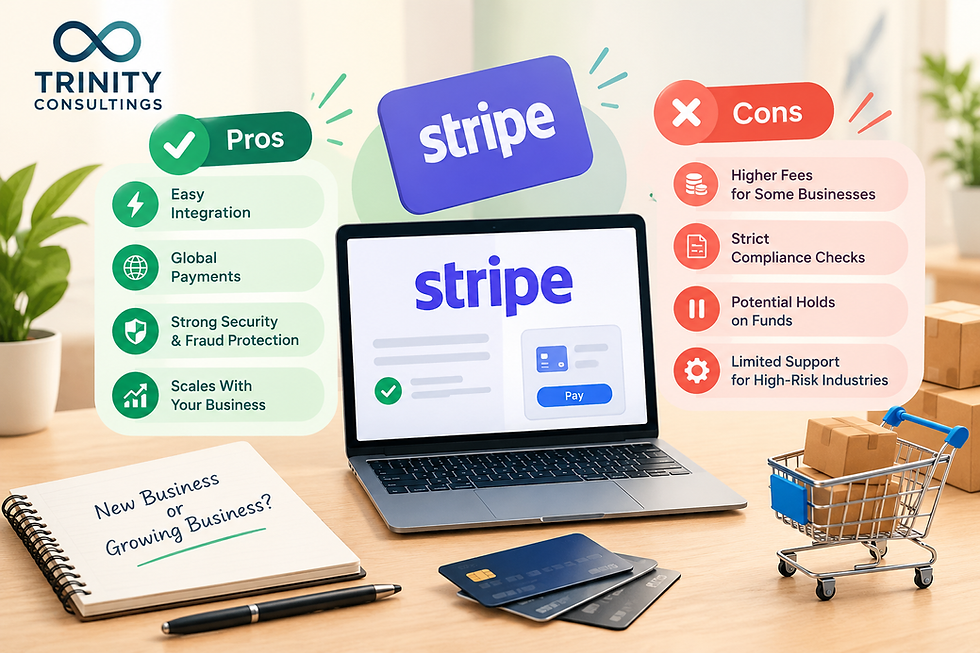
Stripe rejected your application
Or your payments are getting held unexpectedly
At this stage, most people think: “I just need a better provider”
But in reality, the issue is usually deeper than that.
The real challenge is not finding a provider—it’s understanding why your business is considered high risk in the first place.
What “High Risk Merchant Account” Actually Means
A high risk merchant account is not a punishment.
It simply means:
Your business has higher chances of chargebacks
Or your transactions look unpredictable to banks
Or your industry has higher fraud exposure
Examples include:
Dropshipping
Subscription services
Travel bookings
Digital services
Coaching or online courses
So providers label it “high risk” to apply extra security checks—not to block you.
Why Most Businesses Get Rejected (Real Reasons)
Before choosing any provider, understand why rejection happens:
1. Business model not clear
If your website does not clearly explain what you sell, it increases risk.
2. High chargeback possibility
Refund-heavy businesses are flagged quickly.
3. Mismatch in application details
Example: website says “digital services,” but application says “consulting.”
4. No proper policies
Missing refund, privacy, or shipping policies create trust issues.
5. New business history
No transaction history = higher risk score.
A Real Example (How Users Usually Get It Wrong)
Let’s say a user runs an online fitness coaching program.
Step 1:They apply directly to Stripe → rejected
Step 2:They try PayPal → account gets limited after the first few transactions
Step 3:They search “best high risk merchant account providers”
But the real issue was:unclear refund policy + high chargeback expectations + weak website structure
So even the “best provider” would struggle.
What a Good High Risk Merchant Setup Should Actually Do
Instead of just “approving you,” a proper setup should:
Analyze your business risk first
Suggest changes before applying
Reduce chargeback exposure
Help you structure your website correctly
Improve approval chances before submission
This is where many businesses fail—they skip preparation.
How the Right Guidance Helps (Not Just Provider Choice)
A strong setup process usually includes:
Business Risk Review
Understanding if your business is truly high-risk or medium-risk.
Website Optimization Check
Fixing:
product description clarity
policies (refund/privacy/terms)
trust signals
Application Strategy
Choosing:
correct MCC category
correct processing volume
correct description format
Documentation Preparation
Avoiding rejection due to incomplete files.
Common Mistakes Users Make
Applying repeatedly without changes
Using fake or unclear business descriptions
Ignoring chargeback prevention
Thinking “cheap provider = better approval”
Not preparing website properly
These mistakes often lead to repeated rejection cycles.
What Users Actually Want (Behind the Search)
When someone searches this topic, they really want:
“I want approval without rejection”
“I don’t want my account frozen again”
“I want someone to guide me properly”
“I want stable payments for my business”
Not just a provider list.
Why Businesses Seek Guidance from Experts
Some users prefer working with advisory services like Trinity Consultings because the focus is not just on approval, but on:
understanding business risk
preparing documents correctly
avoiding rejection patterns
building a stable long-term payment setup
Example:A business that failed twice in getting merchant approval often succeeds after fixing:
website structure
policy pages
business classification
This preparation stage is what usually makes the difference—not the provider name itself.
Key Takeaways
The real problem is not finding providers—it’s understanding risk
Most rejections happen due to setup issues, not bad luck
Preparation matters more than application
High-risk accounts require strategy, not guessing
Long-term stability depends on proper compliance setup
FAQs
1. Why do I keep getting rejected for merchant accounts?
Usually due to unclear business model, chargeback risk, or missing policies.
2. Is a high-risk merchant account safe?
Yes, if properly set up and monitored with fraud protection tools.
3. Can I reduce my business risk level?
Yes, by improving website clarity and reducing chargeback triggers.
4. Do all providers approve high-risk businesses?
No, each provider has different risk tolerance levels.
5. Why do accounts get frozen after approval?
Mostly due to unexpected chargebacks or suspicious activity.
Conclusion
Most businesses think the solution is simply finding the “best high risk merchant account providers,” but the real success comes from understanding why rejection happens and preparing correctly before applying.
When the business structure, documentation, and risk factors are properly handled, approval becomes much smoother and long-term payment stability becomes possible.
If you are unsure why your application is getting rejected or how to prepare your business correctly, getting proper guidance before applying can save a lot of time, cost, and repeated failures. Trinity Consultings helps businesses understand these issues in a clear, practical way so they can make informed decisions and build stable payment processing setups.

Comments