
Does Stripe Provide Merchant Accounts Through Wells Fargo in the USA?


Businesses looking to accept online payments often research how payment processors work behind the scenes. One question that frequently comes up is: Does Stripe provide merchant accounts through Wells Fargo in the USA?
The answer isn't always straightforward because Stripe operates differently from traditional merchant account providers. Understanding the relationship between Stripe, acquiring banks, and merchant accounts can help business owners choose the right payment solution for their needs.
In this guide, Trinity Consultings explains how Stripe works, the role Wells Fargo may play in payment processing, and what merchants should know before selecting a payment provider.
Understanding What a Merchant Account Is
Before discussing Stripe and Wells Fargo, it's important to understand what a merchant account does.
A merchant account is a special type of account that allows businesses to accept debit and credit card payments. When a customer makes a purchase, the funds are temporarily held while the transaction is authorized and settled.
Merchant accounts help facilitate:
Credit card payments
Debit card payments
Online transactions
Mobile payments
Recurring billing
Traditionally, businesses would apply directly through a bank or merchant services provider to obtain a dedicated merchant account.
How Stripe Works
Stripe operates as a payment platform that simplifies online payment acceptance for businesses of all sizes.
Instead of requiring every business to obtain its own dedicated merchant account, Stripe generally uses a payment facilitator model.
This approach allows merchants to:
Sign up quickly
Accept payments online
Reduce onboarding complexity
Access payment tools immediately
Manage transactions through a centralized dashboard
For most businesses, the experience feels seamless because Stripe handles much of the payment infrastructure behind the scenes.
Does Stripe Provide Merchant Accounts?
This is where many business owners become confused.
Technically, Stripe does not always provide a traditional standalone merchant account in the same way a bank would.
Instead, many merchants operate under Stripe's payment processing framework. Stripe manages much of the relationship with card networks, payment systems, and acquiring institutions on behalf of its users.
As a result, businesses can begin accepting payments without going through the lengthy underwriting process often associated with traditional merchant accounts.
Where Does Wells Fargo Fit Into the Process?
Wells Fargo is one of the largest financial institutions in the United States and has historically participated in payment processing and acquiring services.
In some situations, payment processors and platforms work with acquiring banks to facilitate card transactions.
An acquiring bank is responsible for:
Receiving payment requests
Communicating with card networks
Processing authorizations
Settling transactions
Managing merchant payment flows
While businesses using Stripe may not directly interact with Wells Fargo, certain transactions may be processed through banking partners that support Stripe's infrastructure.
This often leads to questions about whether Stripe merchant accounts are actually provided through Wells Fargo.
Do Stripe Users Receive a Wells Fargo Merchant Account?
For most businesses, the answer is no.
When a merchant signs up for Stripe:
The relationship is primarily with Stripe.
Stripe manages payment processing.
Merchants use the Stripe dashboard.
Payouts are sent to the merchant's bank account.
Businesses typically do not receive a separate merchant account directly from Wells Fargo simply by opening a Stripe account.
The banking relationships generally remain in the background while Stripe handles the user-facing experience.
Why Businesses Choose Stripe
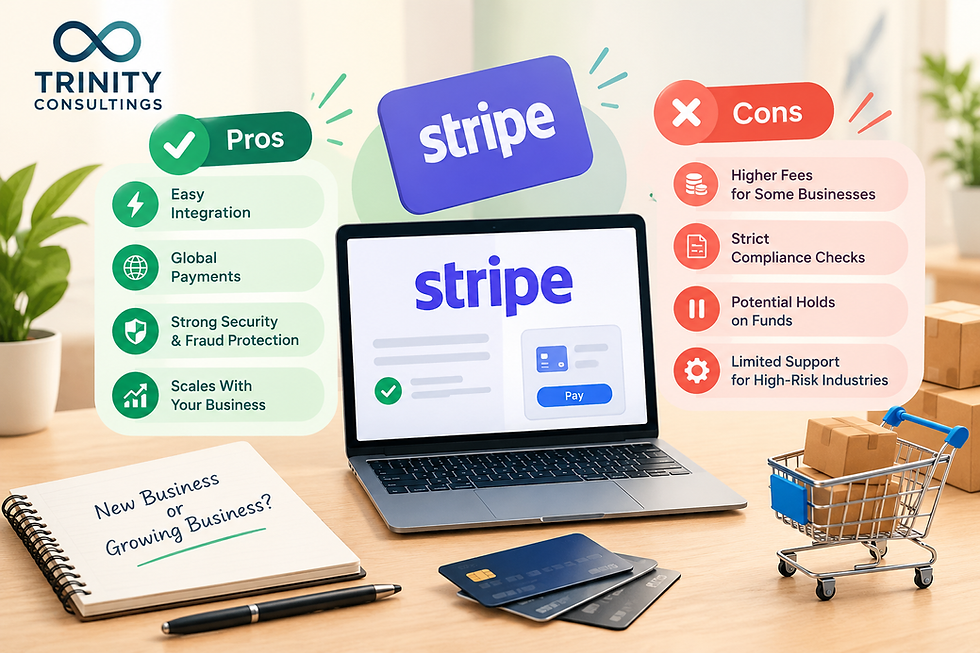
Stripe has become popular because it simplifies payment acceptance.
Some advantages include:
Fast Setup
Many businesses can begin accepting payments quickly without extensive paperwork.
Developer-Friendly Tools
Stripe offers robust APIs and integration options for websites and applications.
Global Payment Support
Businesses can accept payments from customers in multiple countries.
Subscription Billing
Stripe supports recurring payments and subscription-based business models.
Reporting and Analytics
Merchants gain access to detailed payment and transaction reporting.
These features make Stripe attractive to startups, e-commerce stores, software companies, and digital businesses.
When a Traditional Merchant Account May Be Necessary
Although Stripe works well for many companies, some businesses require a more specialized solution.
Examples may include:
Businesses with unusually high transaction volumes
Industries with elevated chargeback risks
Specialized payment environments
Certain regulated sectors
In these situations, a dedicated merchant account may offer additional flexibility and control.
Considerations for High-Risk Businesses
Businesses operating in industries with higher risk profiles often face unique challenges when applying for payment processing.
Examples can include:
Subscription-based services
Travel-related businesses
Online gaming platforms
Certain e-commerce categories
These companies may require additional underwriting and risk evaluation.
A high risk merchant account is specifically designed for businesses that face greater processing risks than standard merchants.
Such accounts often include:
Enhanced fraud monitoring
Chargeback management tools
Industry-specific underwriting
Customized risk controls
The approval process may be more detailed compared to standard payment solutions.
Understanding Stripe Merchant Services
Many business owners researching payment solutions come across the term stripe merchant services.
This generally refers to the collection of payment tools and services offered through the Stripe platform, including:
Payment processing
Subscription management
Fraud prevention
Checkout solutions
Invoicing tools
Financial reporting
These services help businesses manage payments efficiently without dealing directly with multiple providers.
Questions to Ask Before Choosing a Payment Provider
Before selecting any payment processor, consider the following:
What Is My Business Type?
Different industries have different processing requirements.
What Is My Transaction Volume?
Some solutions are better suited for small businesses, while others accommodate larger enterprises.
Do I Need International Payments?
Global businesses may require multi-currency support.
What Are My Risk Levels?
Businesses in higher-risk industries may need specialized underwriting.
How Important Is Scalability?
Choose a provider capable of growing with your business.
Answering these questions can help determine whether Stripe, a traditional merchant account provider, or another solution is the best fit.
How Trinity Consultings Helps Businesses Understand Payment Processing
Payment processing can sometimes feel complicated, especially when terms like merchant accounts, acquiring banks, processors, and payment facilitators are involved.
At Trinity Consultings, businesses often seek guidance to better understand payment solutions, processing structures, and account options so they can make informed decisions based on their operational needs.
Having a clear understanding of how payment systems work helps reduce confusion and improves long-term payment strategy planning.
Conclusion
So, does Stripe provide merchant accounts through Wells Fargo in the USA? For most businesses, Stripe operates as the primary payment platform and manages much of the payment process on behalf of merchants. While banking partners and acquiring institutions may support transaction processing behind the scenes, businesses generally do not receive a separate Wells Fargo merchant account simply by signing up for Stripe.
Understanding the difference between payment facilitators, acquiring banks, and traditional merchant accounts can help businesses choose the right processing solution. Whether you're exploring Stripe, evaluating merchant services, or researching options for specialized processing needs, knowing how these systems work is essential for making informed business decisions.

Comments